
Health communication
CONTENTS
How to use eye drops correctly
Eye drops are commonly used to treat a wide range of eye conditions. Proper administration is important to ensure treatment effectiveness, minimize medication waste, and reduce the risk of contamination or infection. The following instructions provide a safe and appropriate technique for using eye drops.
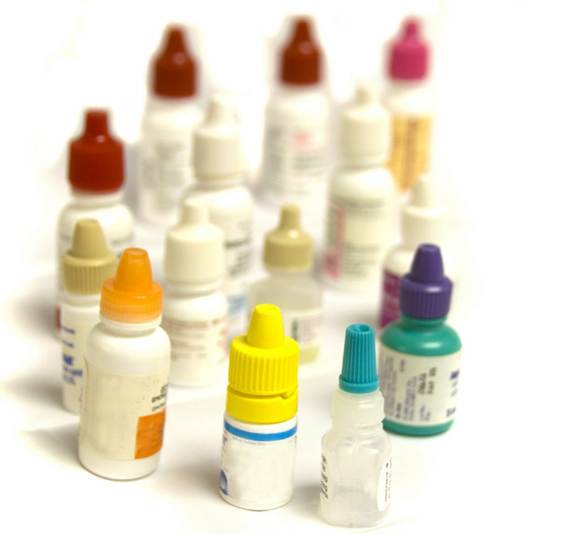
Figure 1. Common types of eye drops available on the market
1. PREPARATION BEFORE USING EYE DROPS
Check the expiration date and inspect the medication for any abnormalities, such as changes in color, clarity, or appearance.
Carefully read the instructions on the medication bottle, package insert, or any information provided by the healthcare facility.
If several ophthalmic formulations are used at the same time, they should generally be administered in the following order: eye drops first, followed by eye gel, and eye ointment last.
Do not self-administer eye drops to an injured eye unless specifically advised by a healthcare professional. In the event of an eye injury, seek prompt evaluation at an ophthalmology clinic or healthcare facility.
If there is discharge or crusting around the eye, clean the area before administering the medication. Use sterile cotton or gauze moistened with cooled boiled water or sterile 0.9% sodium chloride solution, and gently wipe from the inner corner of the eye outward.
Wash your hands thoroughly with soap and water, then dry them with a clean paper towel before handling the medication.
If you wear contact lenses, remove them before applying eye drops unless your doctor has advised otherwise.
Gently shake the bottle before use if the medication is formulated as a suspension.
Remove the cap and place it on a clean surface, such as a clean tissue. Avoid touching the dropper tip. Keep the bottle tip, applicator tip, and cap clean at all times to prevent contamination.
2. HOW TO INSTILL EYE DROPS
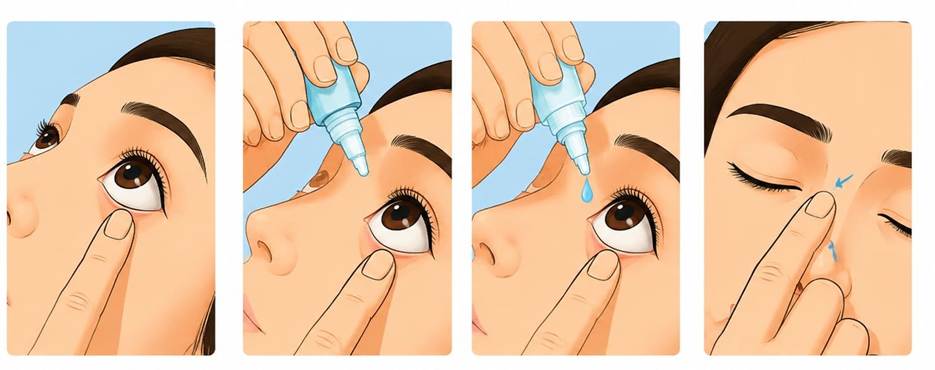
Figure 2. Steps for applying eye drops
Position Yourself Correctly
Tilt your head backward, keep both eyes open, and look upward toward the ceiling. Focus on a fixed point and try to avoid blinking or rubbing your eyes.
Create the Lower Conjunctival Sac
Using your thumb and index finger, gently pull the lower eyelid downward to create a small pocket between the eyelid and the eyeball. This pocket is the appropriate site for instilling the medication.
Position the Bottle Correctly
Hold the bottle with your other hand and position the dropper tip directly above the lower conjunctival sac.
Do not allow the tip of the bottle to touch the eye, eyelid, eyelashes, or surrounding skin, as this may contaminate the medication.
Instill the Medication
Gently squeeze the bottle to instill one drop of medication, or the recommended amount of gel, into the lower conjunctival sac.
Additional drops are usually unnecessary because the eye can retain only a small volume of liquid. If the drop misses the eye completely, repeat the procedure.
Keep the Medication in the Eye
Gently close your eye for several seconds, up to approximately 1 minute, and avoid repeated blinking.
Using a fingertip, gently press the inner corner of the eye near the bridge of the nose. This temporarily blocks the nasolacrimal duct, helping the medication remain in the eye longer and reducing systemic drainage.
If excess medication runs onto the skin, gently blot it with a clean tissue. Do not rub the eye.
Complete the Procedure
Repeat the same steps for the other eye if required.
If more than one type of eye drop is prescribed, wait approximately 5–10 minutes between medications to prevent the second drop from washing out the first.
After completing the procedure, wash your hands again with soap and water.
REFERENCES
Nyawira M, Kenan L. How to use your eye medication. Community Eye Health. 2023;36(118):8.
American Academy of Ophthalmology. How to Put in Eye Drops. Available at: https://www.aao.org/eye-health/treatments/how-to-put-in-eye-drops
Kim Ngoc Son, MSc
Nguyen Hieu Minh, MSc
